Three Erasmus+ projects across a European network of communities
What do we need to learn – as individuals, as communities and as a society – if we want to meet the challenges of our time differently?
Climate disruption, war, political polarisation, democratic uncertainty and growing loneliness are not abstract issues. They shape the lives of young people across Europe and the work of those who support them. At the same time, many people working for change experience a growing sense of exhaustion: the problems are immense, while the possibilities for action can feel painfully small.
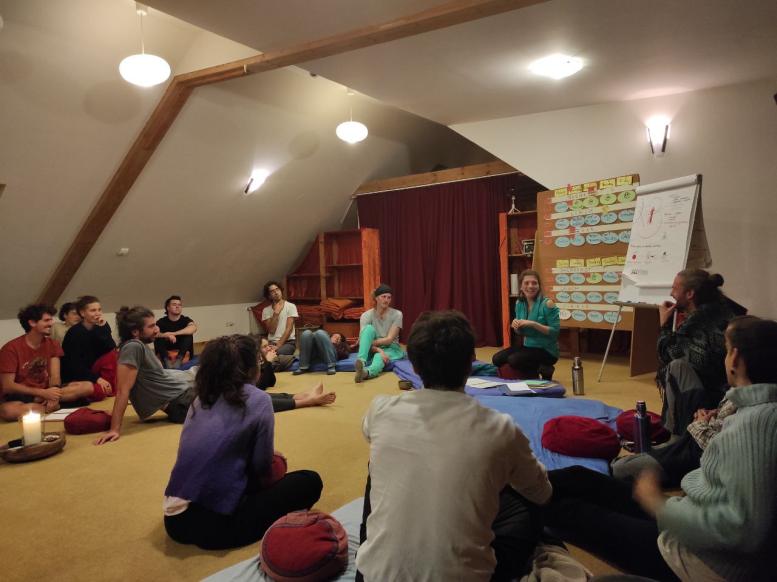
Over the past year, three Erasmus+ projects brought young people, youth workers and facilitators together around this tension.
Youth IN Change: Yes, we (c)are brought young people from Germany, France, Spain and Italy into an intensive experience of community, intercultural exchange and personal exploration at ZEGG.
In Service to Life – A Training for Conscious Peacework brought together people from Germany, France, Spain, Greece and Italyworking with young people to explore the connection between personal resilience, social engagement and ecological responsibility.
And the Forum ZEGG Foundational Training, hosted by our partner community GaiaTerra in Italy, focused on developing the capacity to facilitate groups and create spaces for deeper communication and collective learning.
Different projects, different participants and different partner organisations – but a shared exploration:
How can we develop the inner and collective capacities needed to contribute to a more sustainable, inclusive and life-affirming Europe?
The personal is not separate from the political
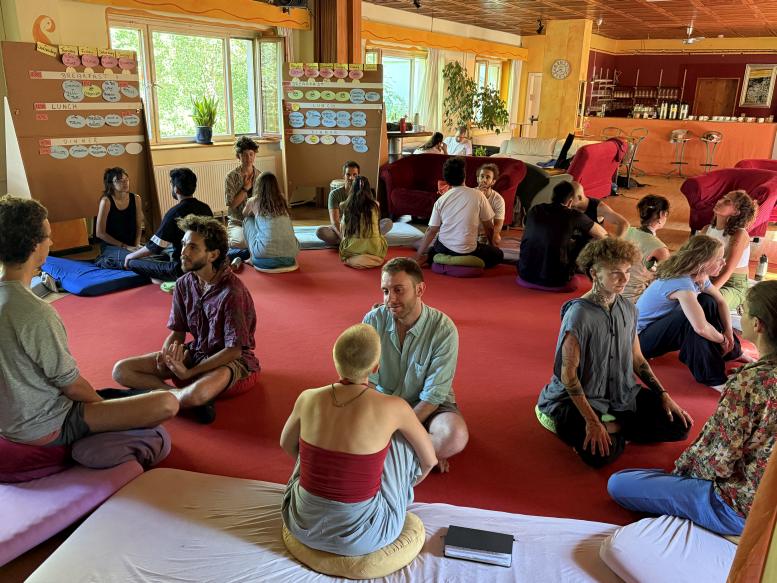
One of the strongest threads running through the projects was the relationship between inner experience and the wider world.
It is easy to speak about climate change, social injustice or political polarisation as problems “out there”. But what happens when we become curious about how the same dynamics live within us and our relationships?
Fear, competition, the need for control, difficulties with trust, exclusion, shame or the inability to stay present in conflict are not only personal experiences. They also influence the groups, organisations and societies we create.
The projects therefore created spaces to explore personal patterns without reducing social problems to individual responsibility.
Participants worked with emotions, communication, boundaries, conflict, embodied awareness and group dynamics while remaining connected to larger questions about ecology, democracy, peace and social change.
For some, this was an important shift.
As one participant of In Service to Life reflected:
“Caring for myself and my mental health is not separate from caring about crises and injustice. It is part of the same commitment to life.”
This perspective changes what resilience can mean. It is not simply becoming better at enduring a difficult world. It can also mean becoming more capable of responding to it without losing connection to ourselves, to others or to what matters to us.
Learning to be in relationship
The ZEGG Forum became one of the places where this exploration could be experienced rather than discussed.
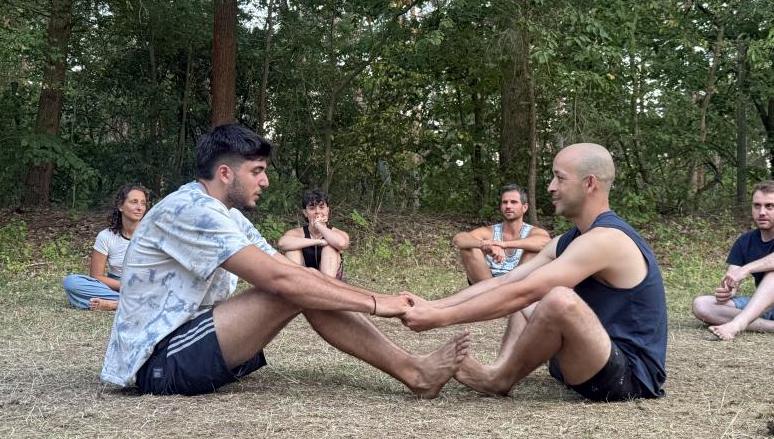
In the Forum, one person brings something alive into the centre of the group. The facilitator does not provide solutions. Instead, they help the person stay connected to their own experience, while the group practises attentive witnessing.
For participants, being seen in this way can be surprisingly powerful.
One participant described discovering the possibility of seeing oneself “through many different sensibilities”. Another reflected that being seen without masks could become, in a sense, an experience of being loved.
But the importance of such practices extends beyond the individual.
Groups are shaped by how people listen, how they handle disagreement, how they respond to vulnerability and how they deal with difference and power. Learning to facilitate such processes is therefore also learning to help shape the culture of a group.
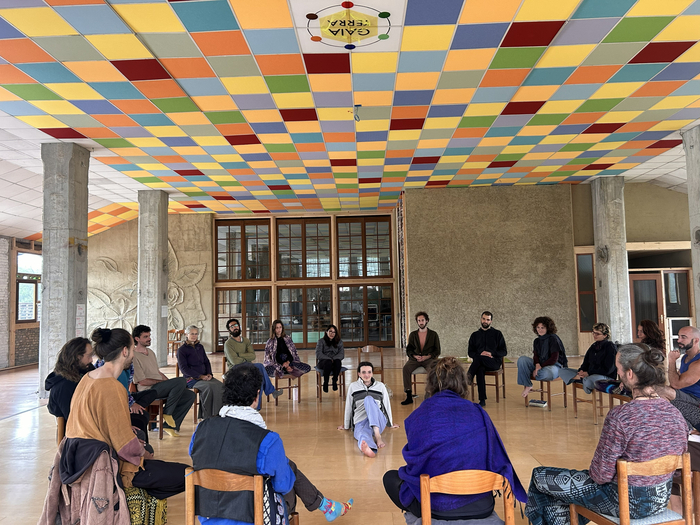
This became a particular focus of the Forum Foundational Training at GaiaTerra. Participants developed facilitation skills while exploring a deeper question: What kind of spaces do we create when we bring people together?
The answer matters in youth work, education, community building and democratic participation alike.
Sustainability as something we live – and learn from one another
The ecological dimension of the projects was not approached only as a topic to discuss, but through encounters with places where people are experimenting with different ways of living.
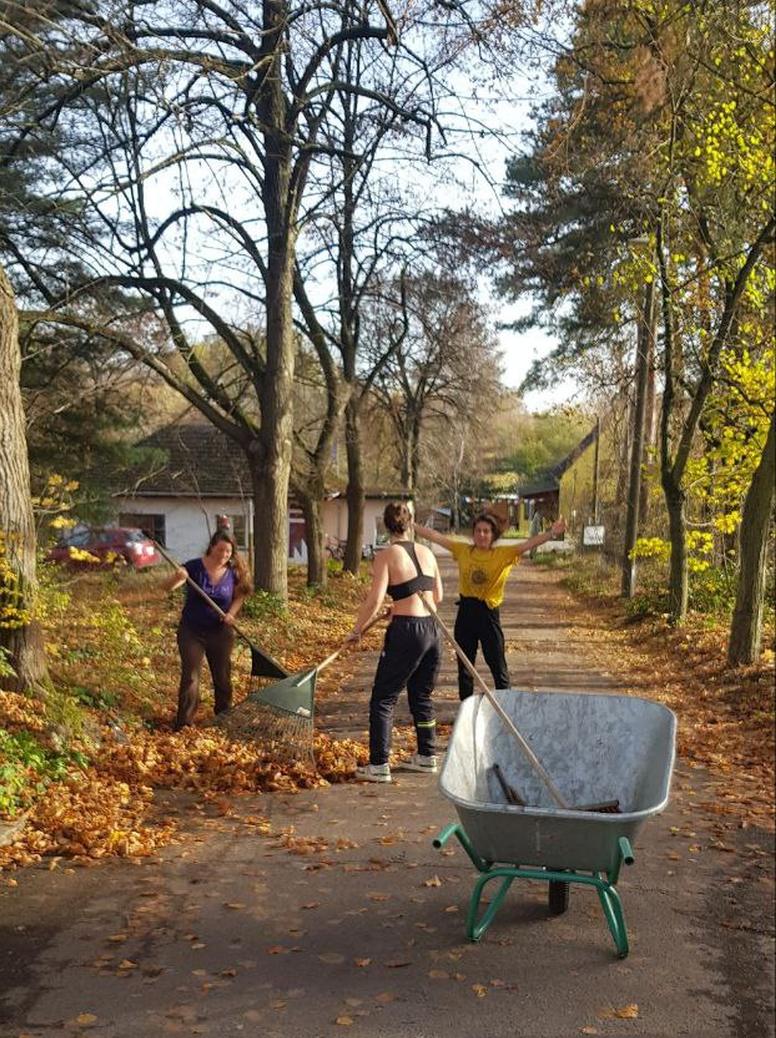
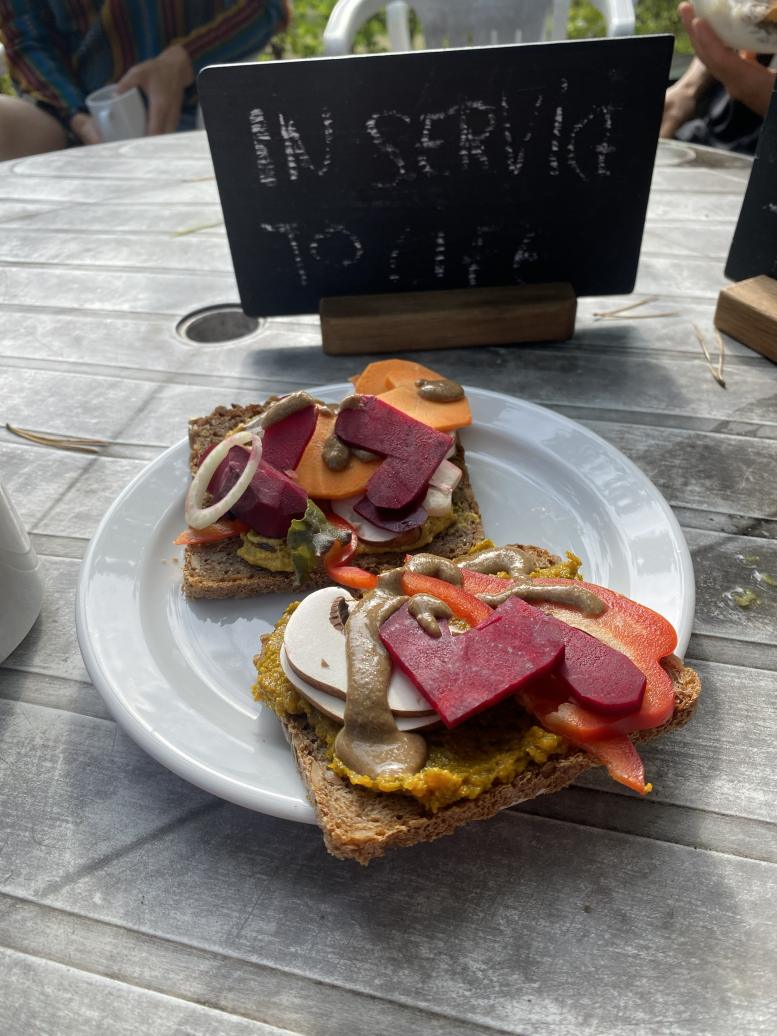
At ZEGG, participants experienced sustainability as part of everyday community life. Through community work in the garden, kitchen and maintenance, they met the people who sustain the place and encountered some of the practical questions of collective ecological living. What does it mean to take responsibility for a shared place? How do food, resources, energy and labour shape a community? And what changes when sustainability becomes part of everyday life rather than an abstract ideal?
The Forum Foundational Training offered a different but complementary encounter. Hosted by our partner organisation GaiaTerra in Italy, the training took place within another community experimenting with ecological ways of living and building. Participants had the opportunity to explore the site together with GaiaTerra's founder and learn about the project's approaches to ecological construction, reuse of materials and waste, and other forms of practical sustainability. GaiaTerra has developed its spaces using natural and recovered materials and works with a strong focus on reducing waste and living more lightly on the planet.
Although the participants were not part of GaiaTerra's everyday work in the same way as they were at ZEGG, the encounter offered something equally valuable: the possibility to see that there is no single way of creating an ecological community. Different places respond to similar questions through different histories, resources, landscapes and experiments.
This is an important part of what our Erasmus+ cooperation makes possible. The partner communities are not simply destinations for mobility projects. They are places of knowledge, experimentation and exchange. By moving between them, participants can encounter different approaches and carry questions, practices and inspiration from one context into another.
Europe as a lived experience
outcomes: relationships across borders.
The Youth Exchange brought young people from four countries into a temporary community. Different languages, cultures and personal histories created moments of friction, curiosity and discovery. European identity emerged through these encounters – not as an abstract concept, but as the experience of living with difference and still finding ways to cooperate, care, disagree, laugh and belong.
The same principle shaped the cooperation between organisations.
Our partners are rooted in different communities and networks across Europe. Not every organisation participated in every project. Instead, different partners joined at different points, bringing their own people, knowledge, practices and perspectives.
The Forum Foundational Training at GaiaTerra was one particularly tangible expression of this exchange: a training developed within the ZEGG Forum network taking place in another ecological community, with participants and partner connections travelling across borders. The encounter allowed not only people, but also different community experiences to meet.
This makes the Erasmus+ network more than a framework for organising mobility. It becomes a living exchange between places that are each experimenting, in their own way, with questions of sustainability, community, participation and social transformation.
And perhaps this is one of the most valuable things participants take home: not the impression that they have found the answer, but the experience that many people in different parts of Europe are working on similar questions – and that they can learn from one another.
What remains after the projects end?
The most interesting outcomes of a mobility are often not visible on the final day.
They appear later: when someone facilitates a group differently, starts a new initiative, brings ecological questions into their workplace, reconnects with a person they met abroad, or feels more confident to speak about something that matters to them.
Participants left these projects with new skills, new questions and, importantly, new relationships.
Some became inspired to bring Forum practices into their own work. Others developed ideas for workshops or sustainability initiatives. Some became more curious about community life and ecovillages. Many left with a stronger sense that they were part of a wider European network of people asking similar questions.
No one returned with a solution to the climate crisis or political polarisation.
But perhaps something more realistic happened.
People returned with a little more capacity to stay present with complexity. A little more confidence in their ability to act. A few more people they could call. And the experience that they do not have to carry everything alone.
A network for what comes next
These three Erasmus+ projects were not designed to create one model of how young people, communities or societies should live.
They created spaces for experimentation.
Spaces where personal development can strengthen collective action.
Where ecological responsibility can become tangible.
Where facilitation can support participation rather than control.
Where young people can discover their own capacity to contribute.
Where European identity can grow through actual relationships.
And where communities can learn from one another rather than trying to find one universal answer.
The projects are now finished. The questions are not.
They continue in the organisations and communities that participated, in the work of the people who took part, and in the relationships that now connect people across Europe.
Perhaps this is one of the quiet strengths of Erasmus+: creating encounters that allow ideas, practices and people to travel.
A Youth Exchange at ZEGG.
A peacework training rooted in community life.
A Forum training hosted by GaiaTerra in Italy.
Three different projects, held by a network of communities and organisations.
And a shared invitation:
to learn not only how to change the world, but how to become capable of living differently within it.